
GLOBAL POLITICS WIREWRITERS →

factrepo

The Fact Repository

THREAD

Thailand–Cambodia Border Conflict

The Thai–Cambodian border across two centuries: the Siamese-French treaties of the 1860s to 1907 that drew the line, the Preah Vihear rulings and clashes, the Ta Moan Thom confrontation of February 2025, the July 2025 armed clashes, the ceasefire and the capture of 20 Cambodian soldiers, and the Kuala Lumpur peace process.

34 FACTSUPDATED Jul 28RSSJSON

THE WIRE

2025-12-31
03:00 UTC
fact_5me3vqn8

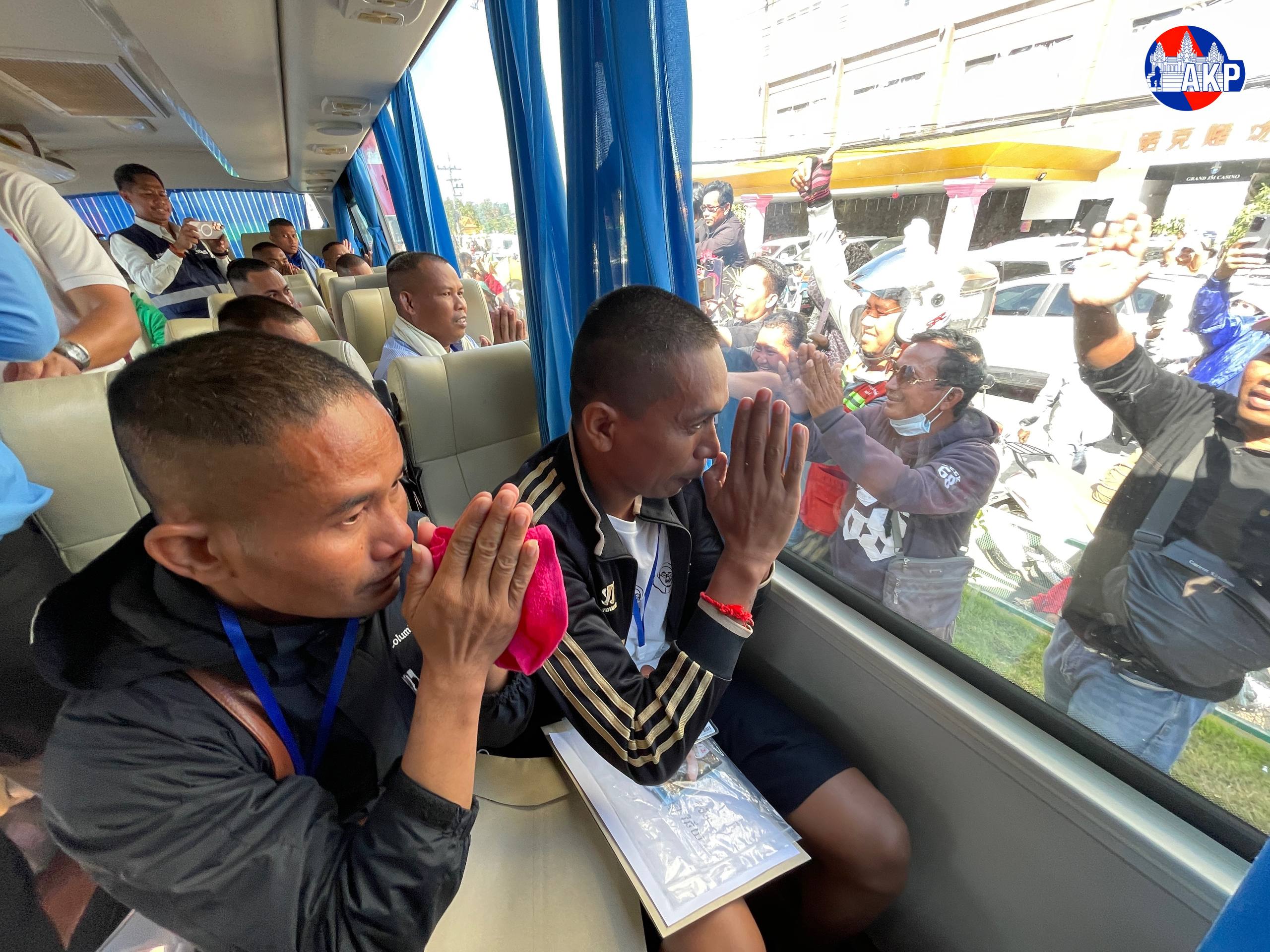
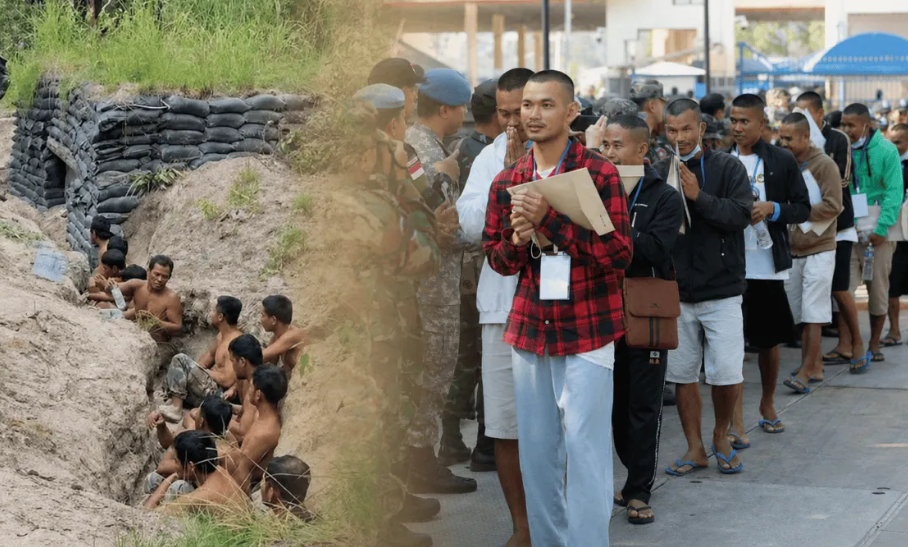
Eighteen soldiers return to Cambodia after 155 days in Thai custody

The 18 Cambodian soldiers were released at 10:00 local time via the Prum–Ban Pak Kard checkpoint in Pailin province, under observation of the ASEAN Observer Team and the ICRC. They received a hero's welcome in Cambodia. The ICRC and EU described the release as a significant step toward rebuilding trust.

✓ VERIFIED3 SOURCESPailin province, Cambodia
2025-10-26
12:00 UTC
fact_4tv7nxc3

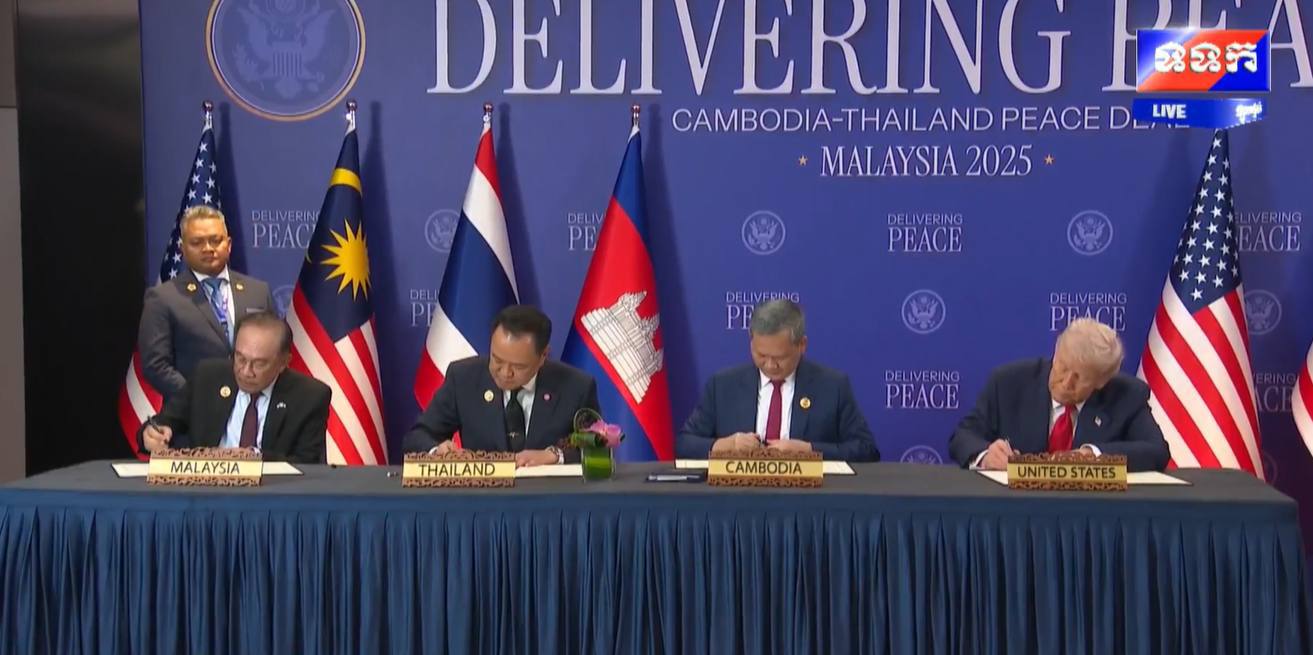
Kuala Lumpur Joint Declaration signed by the Thai and Cambodian prime ministers

Prime Minister Anutin Charnvirakul of Thailand and Prime Minister Hun Manet of Cambodia signed a Joint Declaration — the 'KL Peace Accord' — on the sidelines of the 47th ASEAN Summit in Kuala Lumpur, witnessed by US President Donald Trump and Malaysian Prime Minister Anwar Ibrahim. It established an ASEAN Observer Team to verify the ceasefire, provided for withdrawal of heavy weapons, humanitarian de-mining, and committed Thailand to promptly release the detained soldiers once the measures were implemented.

✓ VERIFIED3 SOURCESKuala Lumpur, Malaysia
2025-07-29
12:00 UTC
fact_2wj6bxz9

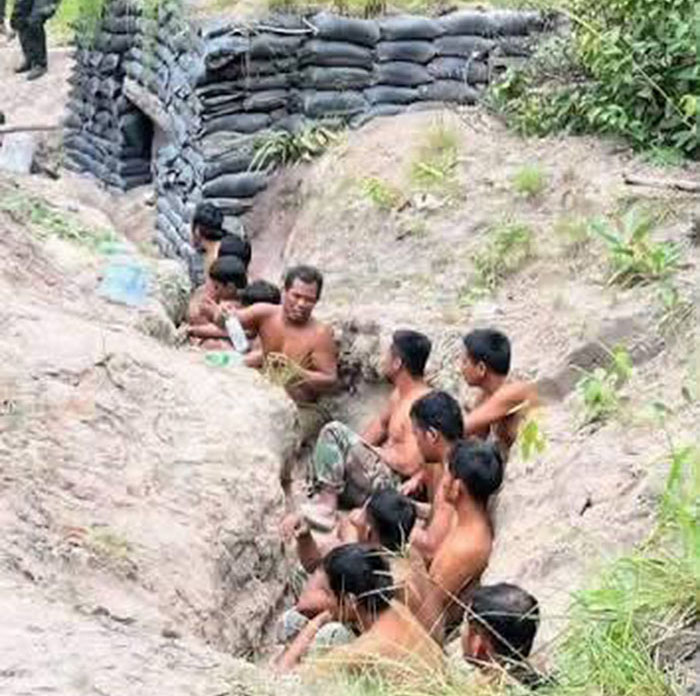
Twenty Cambodian soldiers captured hours after the ceasefire takes effect

Cambodia says Thai forces captured 20 Cambodian soldiers in their trenches in Preah Vihear province hours after the ceasefire began, after inviting them to shake hands — an episode Cambodia's Information Minister called 'The Most Dangerous Handshake'. Of the 20, 18 were detained, one was killed and one escaped. Thailand says Cambodia breached the ceasefire first with small-arms and grenade attacks in the Phu Makua area (Sisaket) and that the detention occurred during renewed hostilities initiated by Cambodia.

⚠ DISPUTED3 SOURCESPreah Vihear province, Cambodia
2025-07-27
17:00 UTC
fact_5hc8trn3

Ceasefire agreed in Putrajaya, effective midnight on July 28

Thailand's Acting Prime Minister and Cambodia's Prime Minister Hun Manet met in Putrajaya, Malaysia, facilitated by Malaysian Prime Minister Anwar Ibrahim, and agreed a ceasefire that took effect at midnight on July 28, 2025. The agreement ended five days of deadly border fighting.

✓ VERIFIED2 SOURCESPutrajaya, Malaysia
2025-07-24
12:00 UTC
fact_vbbml5f1

Cambodia Opened Rocket Attack on Thai Gas Station in Sisaket

During the 2025 Cambodian–Thai border clashes, Thai media reported that Cambodian BM-21 rockets struck a 7-Eleven PTT gas station in Sisaket province, Thailand, contributing to the escalation of hostilities on 24 July 2025. The Washington Post noted a rocket attack in Sisaket on Dec. 15, but did not identify the target. Other sources confirm rocket fire and civilian casualties but lack specific details about the gas station. The claim remains unverified by independent reporting.

✓ VERIFIED3 SOURCESSisaket province, Thailand
2025-07-24
12:00 UTC
fact_9qd2vbm7

Armed clashes break out along the 817-kilometre Thai–Cambodian border

Fighting erupted along sections of the Thai–Cambodian border from July 24, 2025, marking the most serious escalation of the long-running boundary dispute in years. Reported casualty figures differed between the two sides. The clashes continued for five days until a ceasefire was brokered in Putrajaya.

2 SOURCESThai–Cambodian border
2025-06-02
12:00 UTC
fact_3nf8dwk2

Cambodia says it will seek a World Court ruling on disputed border areas

Following a May 28 exchange of fire near Morokot village in which one Cambodian soldier was killed, Prime Minister Hun Manet announced plans to seek an International Court of Justice ruling on several disputed border areas, including the locations of the Ta Moan Thom, Ta Moan Toch and Ta Kro Bei temples. Thailand's foreign minister said its border actions were proportionate and lawful.

1 SOURCESPhnom Penh
2025-02-13
12:00 UTC
fact_7k2m9xq4

Troops confront each other at Ta Moan Thom temple; both sides later play down the incident

Cambodian soldiers and visitors sang the Cambodian national anthem at Ta Moan Thom, an ancient Khmer temple in a border area where delimitation is incomplete (Oddar Meanchey, Cambodia / Surin, Thailand). Thai troops intervened, leading to a verbal confrontation. No casualties were reported. Both militaries later described the situation as normal, with border liaison officers meeting to maintain calm.

2 SOURCESTa Moan Thom, Thai–Cambodian border
2013-11-11
12:00 UTC
fact_9offiu89

ICJ reaffirms 1962 ruling, Preah Vihear belongs to Cambodia

On 11 November 2013, the International Court of Justice ruled that the promontory of Preah Vihear is Cambodian territory and ordered Thailand to withdraw its forces from the area. The ruling reaffirmed the court's 1962 decision that awarded the temple to Cambodia. The decision was based on a 1962 map and aimed to resolve the long-standing border dispute between the two countries.

✓ VERIFIED1 SOURCESThe Hague, Netherlands
2011-07-18
12:00 UTC
fact_7vu9jb1z

ICJ orders Thailand and Cambodia to withdraw troops from Preah Vihear area

On 18 July 2011, the International Court of Justice (ICJ) ordered Thailand and Cambodia to withdraw their troops from a provisional demilitarised zone around the Preah Vihear temple, following clashes in the disputed border area. The order was issued in the context of the 2008–2011 border crisis. Both countries subsequently agreed to withdraw troops in December 2011, and the ICJ later ruled on the sovereignty of the promontory in 2013.

✓ VERIFIED3 SOURCESPreah Vihear, Cambodia–Thailand border
2011-02-04
12:00 UTC
fact_un4kfkmz

Thai and Cambodian forces clash near Preah Vihear in February 2011

On 4 February 2011, Thai and Cambodian forces clashed near the Preah Vihear temple, part of a long-standing border dispute. The fighting continued for several days, resulting in at least ten deaths and displacing thousands of villagers. The clashes were part of the broader 2008–2011 Cambodian–Thai border crisis.

✓ VERIFIED3 SOURCESPreah Vihear, Cambodia–Thailand border
2009-04-03
12:00 UTC
fact_vu89xe3a

Renewed fighting around Preah Vihear kills soldiers on both sides

In early April 2009, Thai and Cambodian troops exchanged fire around the Preah Vihear temple in the worst clashes since the October 2008 standoff. Several soldiers on both sides were reported killed, and both governments accused each other of crossing into disputed ground.

1 SOURCESPreah Vihear
2008-10-15
12:00 UTC
fact_5w4rc683

2008 Preah Vihear border clash unconfirmed by available sources

The claim of a 15 October 2008 armed clash between Thai and Cambodian troops near Preah Vihear, killing at least three soldiers, is not directly supported by the provided sources. Global Voices (20 October 2008) reports a border clash 'last week' with several soldiers killed, but does not specify the date or casualty count. Other sources cover clashes in 2025 and 2026, not 2008. The exact details of the 2008 incident remain unverified in these candidates.

⚠ DISPUTED3 SOURCESPreah Vihear, Cambodia-Thailand border
2008-07-15
12:00 UTC
fact_ji7no8b6

Thai arrests at Preah Vihear spark border standoff with Cambodia

On 15 July 2008, three Thai citizens were arrested after crossing into the disputed area around the Preah Vihear temple, leading to a military buildup by both Thailand and Cambodia along the border. The standoff escalated over the following days, with both sides sending troops and heavy weapons. The dispute centered on land surrounding the 11th-century temple, which was awarded to Cambodia by the International Court of Justice in 1962.

✓ VERIFIED3 SOURCESPreah Vihear temple, Thai-Cambodian border
2008-07-07
12:00 UTC
fact_lkrmeg42

UNESCO lists Preah Vihear as World Heritage; Thai-Cambodian border tensions follow

On 7 July 2008, UNESCO inscribed the 11th-century Preah Vihear temple on its World Heritage List, a decision that heightened longstanding border tensions between Cambodia and Thailand. Within days, both countries deployed troops to the disputed area near the temple, leading to occasional clashes. The temple, a masterpiece of Khmer architecture, has since been a flashpoint in the bilateral dispute, with periodic outbreaks of fighting, including significant clashes in 2011 and 2025.

✓ VERIFIED4 SOURCESPreah Vihear temple, Cambodia-Thailand border
1962-06-15
12:00 UTC
fact_akl5cgjt

ICJ 1962 ruling awarded Preah Vihear temple to Cambodia

On 15 June 1962, the International Court of Justice ruled by nine votes to three that the Preah Vihear temple is situated in territory under the sovereignty of Cambodia. The ruling settled a long-standing border dispute between Cambodia and Thailand over the ancient Khmer temple. The ICJ reaffirmed its decision in 2013, and the temple remains a point of contention in bilateral relations.

✓ VERIFIED1 SOURCESThe Hague, Netherlands
1941-05-09
12:00 UTC
fact_13wujq5k

Thailand and Vichy France sign Tokyo Convention under Japanese mediation

On 9 May 1941, representatives of Thailand and Vichy France signed the Tokyo Convention in Tokyo, Japan, with Japan acting as mediator. The treaty ended the Franco-Thai War and ceded to Thailand the western Cambodian provinces of Battambang, Siem Reap, and Sisophon, as well as parts of Laos. The agreement was a result of Japanese diplomatic intervention following the Battle of Ko Chang in January 1941.

✓ VERIFIED4 SOURCESTokyo, Japan
1930-01-30
12:00 UTC
fact_8f3e32ba

Prince Damrong's 1930 visit to Preah Vihear becomes evidence in the temple dispute

In 1930, Siamese Prince Damrong Rajanubhab visited the Preah Vihear temple as the guest of French colonial officials and was received with Cambodian honours. In its 1962 judgment, the International Court of Justice cited the visit as an occasion on which Siam did not object to the temple's depiction as lying inside French Indochina.

2 SOURCESPreah Vihear
1910-10-23
12:00 UTC
fact_2y5lwnhe

King Chulalongkorn of Siam Dies After 42-Year Reign

King Chulalongkorn (Rama V) of Siam died on 23 October 1910, ending a 42-year reign. During his rule, Siam ceded its Cambodian provinces to the French colonial empire, a loss that has fueled border disputes between Thailand and Cambodia into the 21st century. The event is widely documented in historical accounts.

✓ VERIFIED2 SOURCESBangkok, Siam (now Thailand)
1893-07-13
12:00 UTC
fact_ko79yx3g

French gunboats force Chao Phraya in Paknam Incident, sparking Franco-Siamese crisis

On 13 July 1893, French naval vessels, including the aviso Inconstant and gunboat Comète, attempted to sail up the Chao Phraya River to Bangkok, violating Siamese territory. Siamese forts and gunboats fired warning shots, leading to a battle at Paknam. The French emerged victorious, blockaded Bangkok, and the ensuing crisis ended with Siam ceding territory to France, expanding French Indochina.

✓ VERIFIED3 SOURCESPaknam, Chao Phraya River, Siam
1887-10-17
12:00 UTC
fact_t00z2kec

France Establishes Indochinese Union on 17 October 1887

On 17 October 1887, France formally created the Indochinese Union, consolidating its colonial territories in Southeast Asia, including Cochinchina, Annam, Tonkin, and Cambodia. Laos was incorporated into the union in 1899. The union, also known as French Indochina, lasted until 1954, with its capital initially at Saigon and later at Hanoi.

✓ VERIFIED3 SOURCESSoutheast Asia
1873-11-16
12:00 UTC
fact_g1bv7ts4

Chulalongkorn's second coronation in 1873 marks full royal authority

King Chulalongkorn of Siam, who ascended the throne in 1868 at age 15, held a second coronation on 16 November 1873, shortly after turning 20. This ceremony signified the end of the regency of Somdet Chaophraya Sri Suriwongse and the king's assumption of full ruling powers. The event took place in Bangkok, Siam, and is recorded in historical accounts of his reign.

✓ VERIFIED3 SOURCESBangkok, Siam
1868-10-01
12:00 UTC
fact_btdai72i

King Mongkut of Siam Dies; Son Chulalongkorn Succeeds at Age 15

King Mongkut (Rama IV) of Siam died on 1 October 1868 in Bangkok, after contracting malaria during an expedition to observe a solar eclipse. His 15-year-old son, Chulalongkorn, succeeded him as Rama V, with regent Sri Suriwongse ruling until 1873. Chulalongkorn's reign was marked by modernization and the preservation of Siam's independence.

✓ VERIFIED4 SOURCESBangkok, Siam
1867-08-15
12:00 UTC
fact_1hdwh31m

Siam and France sign treaty on Cambodia protectorate

On 15 August 1867, Siam and France signed a treaty in which Siam recognized the French protectorate over Cambodia, while retaining the western provinces of Battambang, Siem Reap, and Sisophon. The treaty was part of a series of agreements that defined the borders between Siam and French Indochina. The claim's date of 15 July 1867 is incorrect; sources indicate the treaty was signed on 15 August 1867.

⚠ DISPUTED5 SOURCESBangkok, Siam
1863-08-11
12:00 UTC
fact_tt8q3ejn

Cambodia becomes French protectorate under King Norodom

On 11 August 1863, King Norodom of Cambodia signed a treaty with France, placing Cambodia under French protection and ending its tributary status to Siam. The treaty gave France control over Cambodia's foreign relations in exchange for personal protection for Norodom. This established the French protectorate, which lasted until Cambodia's independence in 1953.

✓ VERIFIED4 SOURCESCambodia
1851-04-02
12:00 UTC
fact_944fiq1z

Mongkut Ascends Siamese Throne as Rama IV on 2 April 1851

Mongkut, posthumously honored as King Mongkut the Great, became King of Siam (Rama IV) on 2 April 1851, succeeding his half-brother Nangklao (Rama III). He had spent 27 years as a Buddhist monk before his accession. His reign lasted until his death on 1 October 1868 and was marked by modernization and diplomatic engagement with the West.

✓ VERIFIED4 SOURCESBangkok, Siam